Architectural solutions for creating a quiet home.

By Nessa Pullman
In a world that is constantly stimulating us, we seek refuge in the comfort of our homes — the place we can kick off our shoes, throw on those sweatpants and begin to unplug. Unfortunately, that process of unwinding can be interrupted fairly quickly by noise pollution. Protecting your sense of peace can come down to building in quiet.
The consequences of sound transfer
Sound is the source of many of life’s pleasures: music, laughter, the soothing voice of a loved one. Given the wrong context, however, it can be the source of great agony.
“Sound can create stress,” says Tim Agar, principal at Horizon Pacific Contracting. “And stress within your home is something that should be considered very carefully.”
With rising costs and increased housing demands, municipalities are encouraging multi-family living arrangements, from rental units to multi-generational living. But those tighter quarters can come with some additional challenges — namely, noise transfer.
“With this new change in multi-family living arrangements, we need to reassess the sound this creates in a home,” says Agar, noting this should, ideally, be done at the design-and-build phase.
Whether you’re planning to put in a basement suite for your in-laws while having young kids at home, or making a space to rent to help with the mortgage, creating a sense of privacy for all household members is key to ensuring a comfortable living environment.
“It begins with a conversation about how each individual lives in their home,” says Agar. “Lifestyle and family needs dictate how much sound we need to account for.”
Perhaps those needs include a pair of empty nesters who downsized into a condo but aren’t yet accustomed to living near noisy neighbours, or a family member who does shift work and needs a quiet room for sleep while the rest of the crew is going about their day. No matter the makeup, having control over the sound transference in a home will directly affect the living experience for everyone occupying it.
Start with the walls
The place to start with controlling acoustics is the envelope of the room or space: the walls and ceiling.
Using a combination of specialized materials and thoughtful design will be the most effective in prohibiting sound transference, and building these into the initial design is important for future-proofing rooms for various needs ahead.
“The goal is to use materials that will both block and absorb sound,” says Isaac Wicks, manager at Capital City Drywall & Painting.
For blocking sound, the idea is to isolate the frame of the room from the materials, which stops sound waves from travelling to the next room or space. There are a few ways this can be done. One is staggered framing, which has the targeted room on a detached frame from the rest of the home — this inhibits sound vibration from travelling to the rest of the house structure. Another way is to add a framing assembly using a resilient bar and isolation clips, which help segregate the structure while absorbing sound waves to stop transference.
After blocking measures are in place, it’s time to add density to absorb any resilient sound. This can be done by using high-quality insulation mixed with multiple layers of drywall. Those wanting the highest level of soundproofing, while also saving on space, can use a product called QuietRock: a led-infused material that is equivalent to seven or eight sheets of regular drywall.
“We can work with one, or all of these systems depending on the level of soundproofing desired,” says Wick.
Design your own sound
Beyond the bare structure, there are a few design interventions that contribute to sound transference within a home.
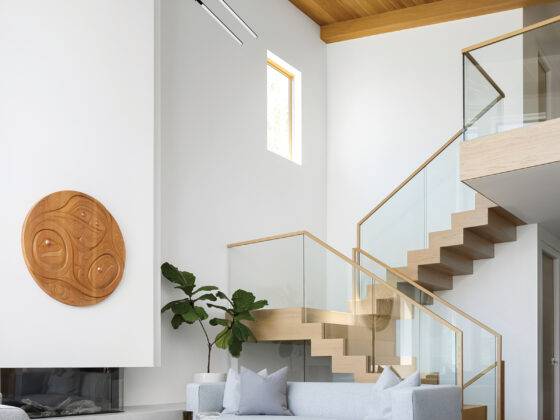
“You’ll want to avoid having too many reflective surfaces,” says Agar. “Large windows and hardwood floors will allow sound waves to bounce and project to the rest of the house.”
Agar suggests adding lots of carpets and thick draperies that can absorb some of that reflective sound, or opting for polished concrete on the floor, which is a much quieter alternative to hardwood.

With open-concept spaces still on trend, it is more difficult to control sound within living zones. This is where building a separate scullery kitchen can be useful when the whole family is occupying one space and you want to be conscious of noise.
Account for background noise
When discussing sound pollution within a home, it can’t go without mentioning the one area most people overlook: noise from everyday appliances and mechanical systems.
“Over time, these low-frequency sounds contribute to people’s overall well-being,” says Agar.
Placing any large mechanical systems (such as heat pumps) off-site — or at least away from the windows to the primary bedroom, for example — will help tremendously in quieting a home. In addition, adding an acoustical lining to any duct chambers will decrease sound exponentially.

Other common appliances that create noise are bathroom and range-hood fans. Agar suggests using a high-quality, motion-censored fan in bathrooms, as this prohibits fans from running longer than needed. For range hoods, using a product like Vent-A-Hood, which focuses on creating quiet-sounding, highly efficient fans, will help with those open-concept spaces.
“Many people are sensitive to multi-layered sounds without realizing it,” says Agar.
Whether your next project will be building a media room for your teenagers, a private meditation room or a rental suite, having solutions for sound transference will prove beneficial to you — and others — in your overall living experience.